This week I have been mostly reading:
Techniques of the Selling Writer by Dwight V. Swain
I read this book yonks ago but what's alarming is I don't remember much of it. Maybe it was too soon in my writerly development to make an impression. Anyway, I saw it recommended recently and decided to revisit. As you know, I'm something of a How to Write bookaholic - can't count how many I've devoured over the last ten years.
It's a relatively old book (first published 1965) but even taking that into account he gives sound advice on writing better stories, from structuring conflict to developing workmanlike habits. He stresses the importance of feeling in writing fiction, something that's easy to loose sight of when researching and becoming obsessed with facts.
Plotto by William Wallace Cook
Has been on my night stand for a few months. It's another old book - 1928 this time - and is less a how to book than a catalogue of complications to help construct plots. To be honest, I'm finding it hard to get into and haven't quite cracked the system he uses despite a couple of attempts. Maybe I'll take it on holiday with me next month and give it my fuller attention.
The Secrets of eBook Publishing by Mark Coker
This is an easy to read guide by the founder of Smashwords. Downloaded onto my Mac which means I can only read it in bite sized chunks, but a useful guide.
Think Like A Publisher by Dean Wesley Smith
Another How To guide, from publisher and author Smith. Makes interesting reading on all aspects of setting yourself up as a publisher.
Saturday, 19 May 2012


Saturday, 12 May 2012
More Internet Insanity
There's an old saying, "Nowt as queer as folk!" And if you hang around the internet for long enough you'll find it's no exaggeration.
This week I was tipped off on a writers' forum about a blog post where a self-published author had voiced some opinions on reviewing. The forum post was clearly a call to arms because when I followed the link I found a dozen or more posts haranguing the poor woman for nothing worse than having an opinion. How dare you, they cried as one, tell us how to voice our opinions. Shame it never occurred to the nitwits they were doing the exact same thing.
Because we all have opinions and we all think we're right. Maybe we are, maybe we aren't. But unless we're putting a gun to someone's head and forcing them to do our will, where's the harm in it? If you don't like a book or a blog or the colour of someone's hair, so what? You're entitled to your opinion just as I'm entitled to ignore it.
The internet community is a funny place. It is an unreal world peopled largely by creatures of our own imagining. We put faces to these strangers based on the things they post - we begin to feel a connection or a revulsion depending on how well they match up to our own values, and it can feel oddly intimate considering it is nothing more than words over the ethernet. For some individuals the internet should come with a health warning because that very anonymity brings out the worst in them. I've blogged before about the groupthink effect on forums, but there are also trolls who no doubt see themselves as crusaders, ridding the internet of injustice, persecuting anyone whose ideas they dislike, stalking and spying in a way only previously found in Le Carre novels. It's bizarre to the point of insane. Isn't it enough for these people that they be allowed to voice their opinions? Apparently not.
I recently saw a discussion about whether Mein Kampf, Adolf Hitler's infamous magnum opus, should be republished in Germany. I hadn't realised it was banned there until now, but it doesn't surprise me. We have come to think of Nazism and fascism as synonymous, thanks to several decades of hefty propaganda. But the fact is fascism is all around us and always has been. It's in you and me. Yes it is. Whenever you want to delete a comment or ban a poster who has said something you don't like, that's fascism in action. It's a human disease - intolerance. But really, there is no need to ban or edit or delete anyone.
Because they're just opinions, people. They can't hurt you.
This week I was tipped off on a writers' forum about a blog post where a self-published author had voiced some opinions on reviewing. The forum post was clearly a call to arms because when I followed the link I found a dozen or more posts haranguing the poor woman for nothing worse than having an opinion. How dare you, they cried as one, tell us how to voice our opinions. Shame it never occurred to the nitwits they were doing the exact same thing.
Because we all have opinions and we all think we're right. Maybe we are, maybe we aren't. But unless we're putting a gun to someone's head and forcing them to do our will, where's the harm in it? If you don't like a book or a blog or the colour of someone's hair, so what? You're entitled to your opinion just as I'm entitled to ignore it.
The internet community is a funny place. It is an unreal world peopled largely by creatures of our own imagining. We put faces to these strangers based on the things they post - we begin to feel a connection or a revulsion depending on how well they match up to our own values, and it can feel oddly intimate considering it is nothing more than words over the ethernet. For some individuals the internet should come with a health warning because that very anonymity brings out the worst in them. I've blogged before about the groupthink effect on forums, but there are also trolls who no doubt see themselves as crusaders, ridding the internet of injustice, persecuting anyone whose ideas they dislike, stalking and spying in a way only previously found in Le Carre novels. It's bizarre to the point of insane. Isn't it enough for these people that they be allowed to voice their opinions? Apparently not.
I recently saw a discussion about whether Mein Kampf, Adolf Hitler's infamous magnum opus, should be republished in Germany. I hadn't realised it was banned there until now, but it doesn't surprise me. We have come to think of Nazism and fascism as synonymous, thanks to several decades of hefty propaganda. But the fact is fascism is all around us and always has been. It's in you and me. Yes it is. Whenever you want to delete a comment or ban a poster who has said something you don't like, that's fascism in action. It's a human disease - intolerance. But really, there is no need to ban or edit or delete anyone.
Because they're just opinions, people. They can't hurt you.
Saturday, 5 May 2012
Do Books Change the World?
So, what are we writing for? Can writing make a difference? Or is it just entertainment?
Of course there are examples of non-fiction which has helped to shape and alter public opinion, but can fiction?
The danger of setting out to make a difference is you may fall into the trap of preaching which is one of the biggest reader turnoffs. And fiction, like any art form, is only partially in the mind of the author. Every reader will take something different from it, depending on their own attitudes. Sometimes they will even take something that was never intended, had never even occurred to the author. Is that a bad thing? Is there a right and wrong interpretation of a book? I don't think so.
All we can ever do at any given moment is be true to our own vision of the story. After it goes out into the world it's up to the reader to decide what we are trying to say. So our sweet love story may be seen as a scathing indictment of the class system, our edgy thriller a critique of modern day morality. It's in the eye of the beholder and not completely under our control.
So I think fiction can make a difference but usually unintentionally. Readers are too many and varied a group to react identically to the same story. Of course, in times of change a novel can capture the zeitgeist of the moment and become emblematic, for example Harriet Beecher Stowe's Uncle Tom's Cabin. But such instances are rare and unpredictable.
Of course there are examples of non-fiction which has helped to shape and alter public opinion, but can fiction?
The danger of setting out to make a difference is you may fall into the trap of preaching which is one of the biggest reader turnoffs. And fiction, like any art form, is only partially in the mind of the author. Every reader will take something different from it, depending on their own attitudes. Sometimes they will even take something that was never intended, had never even occurred to the author. Is that a bad thing? Is there a right and wrong interpretation of a book? I don't think so.
All we can ever do at any given moment is be true to our own vision of the story. After it goes out into the world it's up to the reader to decide what we are trying to say. So our sweet love story may be seen as a scathing indictment of the class system, our edgy thriller a critique of modern day morality. It's in the eye of the beholder and not completely under our control.
So I think fiction can make a difference but usually unintentionally. Readers are too many and varied a group to react identically to the same story. Of course, in times of change a novel can capture the zeitgeist of the moment and become emblematic, for example Harriet Beecher Stowe's Uncle Tom's Cabin. But such instances are rare and unpredictable.
Saturday, 28 April 2012
A Tribute to Human Spirit
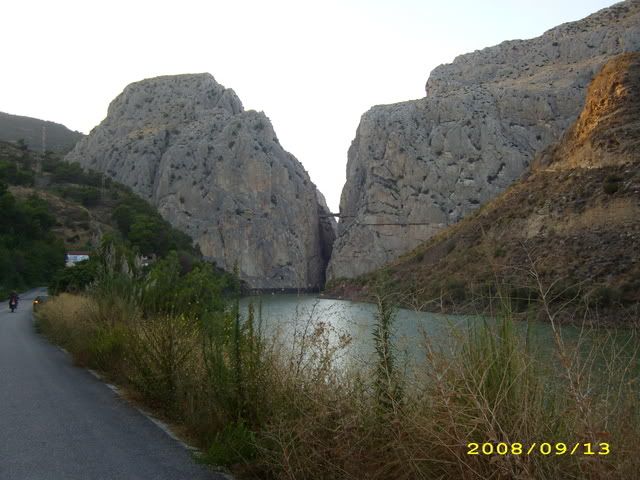 I'm posting a link this week. No, this isn't anywhere I've been - I'm much too cowardly to venture into such a terrifying place as this - but it's fascinating to think that people voluntarily go up there, presumably for the thrill of danger.
 Here it is. While you're watching, you might like to reflect on a few things.
According to Wiki, Camino Del Rey was built between 1901 and 1905 to carry materials up to the hydroelectric plants in the Spanish mountains. It is a concrete walkway, a metre wide, supported by steel girders. Just imagine what it must have taken to build such a precarious path in so inhospitable a location. Were lives lost?
It just goes to show the determination - some might even say foolhardiness - of the human spirit. But if people can imagine something, and they need it badly enough, they will succeed. It's inspiring.
Saturday, 21 April 2012
Sponsored Classics
 With the contraction in the book business it seems the Advance is shrinking faster than a Spice Girl on a postpartum diet. For those of you who aren't familiar with advances - which planet are you from, by the way? - they are a lump sum paid by publishers to authors as a way of sealing the contract between them. The term really means an advance of royalties, so naturally the amount offered will reflect:
a. how much the publisher values the acquisition and feels confident about selling
b. how much effort and expense they are therefore likely to expend in promoting the book
That was back in those halcyon days before the world economy collapsed and Amazon was just a scary story Acquisition Editors told their juniors to keep them in line. In these cash strapped times advances are hard to come by. So what can we authors do to find alternative sources of income to support our art?
Perhaps it is time to find commercial sponsors? It happens on TV after all. Product placement is hardly new. Maybe it's time classics new and old carried some familiar household products to help generate revenue?
We could have:
Hard Times by C. Dickens, sponsored by Rotary Watches.
The Constant Gardener by John Le Carre, sponsored by Levington's Compost
Cat in the Hat by Dr. Seuss, sponsored by Whiskas
Robinson Crusoe by Daniel Defoe, sponsored by Thomas Cook
The Thirty-Nine Steps by John Buchan, sponsored by Stannah Stairlifts
The Big Sleep by Raymond Chandler, sponsored by Nytol
Saturday, 14 April 2012
Anniversaries
I've had anniversaries on my mind this week, probably because both my wedding anniversary and birthday have occurred within the last eight days. They seem to whiz round with ever increasing rapidity but I'm sure you find the same.
 Another more momentous anniversary falls tomorrow. The Titanic sank one hundred years ago. Even a century after the event the resonance of that shocking disaster still touches people like myself who were born many years after it and weren't concerned personally in any way. But the facts of it are so huge in scale and still difficult to comprehend. Titanic was the pride of its shipping line, the biggest and best of its kind, the most luxurious and invincible. And yet five days after starting its maiden voyage it lay at the bottom of the ocean, a testament to the fallibility and frailty of humanity.
Of the 2 223 on board who woke that morning, only 710 would see another dawn. Among them were men, women and children; crew members and passengers; rich and poor. 1 517 deaths in the space of a few hours. It is a sobering thought even one hundred years on.
I recently watched A Night to Remember, the 1958 British film of the disaster, and can heartily recommend it not only as a faithful representation but also as a gripping piece of filmmaking.
We should remember this anniversary, if only to remind ourselves that however grand the human race thinks it is, nature always holds the trump card.
 Another more momentous anniversary falls tomorrow. The Titanic sank one hundred years ago. Even a century after the event the resonance of that shocking disaster still touches people like myself who were born many years after it and weren't concerned personally in any way. But the facts of it are so huge in scale and still difficult to comprehend. Titanic was the pride of its shipping line, the biggest and best of its kind, the most luxurious and invincible. And yet five days after starting its maiden voyage it lay at the bottom of the ocean, a testament to the fallibility and frailty of humanity.
Of the 2 223 on board who woke that morning, only 710 would see another dawn. Among them were men, women and children; crew members and passengers; rich and poor. 1 517 deaths in the space of a few hours. It is a sobering thought even one hundred years on.
We should remember this anniversary, if only to remind ourselves that however grand the human race thinks it is, nature always holds the trump card.
Saturday, 7 April 2012
Composition

But composition is important, indeed crucial, to telling a good story (not that I learned that in school - the word itself was all I remember being taught).
I've come back to this recently because, in my quest to improve as an amateur artist I have encountered some interesting advice that pertains to writing as well as art. And it's this: If you have trouble finishing a project, it's likely that the composition is wrong and no amount of tinkering will ever make it right.
So what is composition? In art, it's the arrangement of elements in your picture. For a picture to be effective it has to be composed well from the outset, or the planning stage. We need to be aware of the focal point - the punchline if you like. Where is the eye drawn? What is the ultimate point?
And stories are the same. What is the message, or point of the story? Are all the elements arranged to lead the reader to that point or does it lose focus? In other words, is the story composed in such a way to carry the reader to the conclusion we want?
So, if you are constantly tinkering with a story and can't seem to get to a satisfactory conclusion, maybe your composition is off. Maybe the characters aren't the best fit, or the setting, or the events. It's food for thought.
Subscribe to:
Posts (Atom)