
Showing posts with label plotting. Show all posts
Showing posts with label plotting. Show all posts
Monday, 7 November 2011
New Project Planning


Wednesday, 28 September 2011
Planning and Pantsing

I've seen folk come to virtual blows over it.
First off, I have to say I don't think there is a right way in any art form. Dogma kills spontaneity quicker than a dose of rat poison. And what works for one man will be anathema to someone else.
I used to be more of a confirmed pantser, ie flying by the seat of my pants. It's very much in the spirit of Nanowrimo which I've raved about in the past. The trouble is it's inefficient. You'll end up with a lot of dross and surplus material, scenes you don't need etc. But it is a thrilling way to write and I recommend it for anyone feeling blocked or jaded.
With each project I attempt I try to plan more. That's because each time you travel this road you see the pitfalls, the places where you wrote yourself into a blind alley. If only you had a more reliable road map to see you through the maze of ideas you could simply concentrate on the writing. So I plan. Or at least I try to. My creative mind is infuriatingly resistant to any limitations and tries to take the story off road at every opportunity. So I've learned not to plan too fastidiously and not to get upset if the story takes off in another direction I hadn't expected.
Wednesday, 10 August 2011
How Thick Is Your Plot?
Here is another fascinating Book Deal blog about ways to thicken your plot.
I said in an earlier post that in revision what I find is generally too much plot. Anyone who's done Nanowrimo will recognise the casually tossed in and incongruous plot twist used to liven things up when your energy level is flagging. I make no apology for this. Writing a first draft is like running a marathon and at times you will try anything to get some momentum going when your ideas have run dry and the characters are standing around looking for inspiration.
But that's the great thing about revision. These things are so easy to spot and easy to deal with, assuming you are ruthless enough. All the daft stuff has to go. I find I can usually remember what I was thinking when I made Dorothy, the one legged trapeze artist lover of Quentin, the Main Character, pull that sabre from her knickers and chop off the heads of all seven of their party guests. I was tired and bored and itching to write something exciting for a change. But let's face it, it won't really play in a Romcom now will it? So the sabre, the party, even Dorothy have to go. Yes, I know it was a week's work, but it's contrived, it deviates from the plot and frankly, it's dumb.
If it means losing a lot of material then so be it. The point is to carve out the excess to reveal the story and bring salient plot points to the fore. New scenes will present themselves - I have a constant struggle to stop myself rewriting nearly every scene. The revision is hard work. It isn't just a bit of nip and tuck.
I said in an earlier post that in revision what I find is generally too much plot. Anyone who's done Nanowrimo will recognise the casually tossed in and incongruous plot twist used to liven things up when your energy level is flagging. I make no apology for this. Writing a first draft is like running a marathon and at times you will try anything to get some momentum going when your ideas have run dry and the characters are standing around looking for inspiration.
But that's the great thing about revision. These things are so easy to spot and easy to deal with, assuming you are ruthless enough. All the daft stuff has to go. I find I can usually remember what I was thinking when I made Dorothy, the one legged trapeze artist lover of Quentin, the Main Character, pull that sabre from her knickers and chop off the heads of all seven of their party guests. I was tired and bored and itching to write something exciting for a change. But let's face it, it won't really play in a Romcom now will it? So the sabre, the party, even Dorothy have to go. Yes, I know it was a week's work, but it's contrived, it deviates from the plot and frankly, it's dumb.
If it means losing a lot of material then so be it. The point is to carve out the excess to reveal the story and bring salient plot points to the fore. New scenes will present themselves - I have a constant struggle to stop myself rewriting nearly every scene. The revision is hard work. It isn't just a bit of nip and tuck.
Wednesday, 3 August 2011
Some things that amaze me
When revising, it always amazes me...
... how much I can cut. When writing the story, I invariably include far more extraneous detail than is needed to keep things moving. Some people go overboard on description, and I am certainly guilty of that, but my worse crime is the running commentary. He did this, then he walked to the door and looked out, then he lit a cigarette, then ....you get the drift. It's so satisfying to prune out all that stuff and home in on the pivotal moments.
... how easily I got bogged down and blown off course. Part of it is covering all the bases, of course. But one thing that becomes clear at this stage is where I have wandered off the plot and into some expository Neverland of irrelevant backstory and subplot blind alleys. I blame the characters. If only they'd stick to the script...
...how little plot you actually need. You do need some plot of course, but only enough to give the scene meaning and purpose. After that you don't need to think about it, just concentrate on the characters.
...how depressingly bad my writing can be. But hey, cheer up! I'm going to fix it, right?
But at least I haven't done this ...yet.
... how much I can cut. When writing the story, I invariably include far more extraneous detail than is needed to keep things moving. Some people go overboard on description, and I am certainly guilty of that, but my worse crime is the running commentary. He did this, then he walked to the door and looked out, then he lit a cigarette, then ....you get the drift. It's so satisfying to prune out all that stuff and home in on the pivotal moments.
... how easily I got bogged down and blown off course. Part of it is covering all the bases, of course. But one thing that becomes clear at this stage is where I have wandered off the plot and into some expository Neverland of irrelevant backstory and subplot blind alleys. I blame the characters. If only they'd stick to the script...
...how little plot you actually need. You do need some plot of course, but only enough to give the scene meaning and purpose. After that you don't need to think about it, just concentrate on the characters.
...how depressingly bad my writing can be. But hey, cheer up! I'm going to fix it, right?
But at least I haven't done this ...yet.
Wednesday, 1 June 2011
New Project Planning

I'm itching to get to grips with something new, having finally put the WIP to one side for a cooling off period. I don't know about you but by the time I get to the end of a draft of something I'm so sick of being immersed in that world I'm twitching for a complete change. As it's a paranormal mystery with high drama and life or death stakes it's not surprising I fancy something a little lighter.
I had a go at a romcom last year but it ground to a halt. Romance isn't as easy as it looks, I've decided. Maybe I'm just too nasty to want lovey-dovey endings. But I haven't given up on wanting to write a comedy so I'm thinking a Black Comedy would suit me better. Or satire. I love taking the piss out of things so it's right up my street. But choosing a subject is tough. It has to be original and yet have enough potential to sustain the comedy from start to finish. Trying to figure out what I want to write is nearly as tough as writing it.
So I'm reading Catch 22 as an example of black comedy. There are lots of movie examples too, like Brazil and Dr Strangelove which are two of my favourite films. Any other suggestions?
Sunday, 24 April 2011
Backstory and Royal Weddings
Someone very wise once said we don't know who we are now unless we study our past. That's why backstory has an important place in the stories we tell.
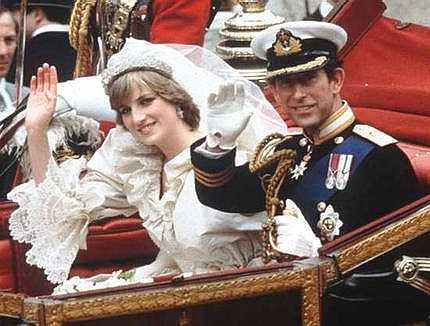
A few months ago, when the impending Royal Wedding was announced, I was somewhat astonished at the largely negative reaction I saw on the boards I frequent. Why would anyone react this way about celebrating a happy event? After all, William and his betrothed are young, glamorous and photogenic. It's an extra day off work for many people and a moment of glory in these hard recession-weary times.
But I too had those sinking feelings, and I know exactly why. Anyone who is old enough will remember the marriage of his father and mother, nearly 30 years ago. That too was a big production - Hollywood couldn't have done it better - and for months before it was all over the media. On the day crowds lined the streets and everyone tuned in to watch. It was sold as a fairytale wedding and it certainly looked like it.
In the years that followed people gradually woke up to the fact that it had been a sham. The groom was marrying to please his family and had no great love for his bride, in fact he was heavily involved with a married friend. Of course their personal lives are their own business, but what makes me bitter is the way the public, who paid for this sideshow, were completely lied to for years until the marriage ended in bitter divorce.
All of which serves to illustrate the importance of backstory. We need to know something about the background of a character in order to understand the story happening now, simply because events of the past shape us as people. Of course that doesn't mean a complete biography, and the skill lies in getting that balance between giving enough information with moving the story forward.
But never underestimate the importance of backstory in helping your reader understand who your character is today.
Wednesday, 5 January 2011
When Characters Misbehave

Do you plot?
All the books on plotting make it seem so simple. You need a beginning, a middle and an end and various plot twists along the way and Bob's Your Uncle there's a template to follow. If only it were that easy.
The trouble is getting my characters to comply. I can spend months meticulously researching and planning and when I'm finally ready for the off I make the fundamental mistake of casting a bunch of bolshie prima donnas who proceed to flounce up and down, trampling my exquisitely crafted plot into the carpet. They have their own ideas about what to do and say and no amount of jumping up and down on my part will convince them otherwise. I'm all for democracy, but surely I'm the author and they should at least pretend to take some notice of what I expect from them?
I've tried several ways around this problem. In a recent project the lead was relegated to being a supporting character, in another a bit part was promoted to antagonist. But it all involves massive rewrites. Perhaps the fault is mine. Am I casting the wrong characters from the get go, or has word got round that I'm a soft touch and will tolerate them all sitting around bitching about me in chapter three? It's probably the latter because I confess I have a soft spot for my characters and am not nearly firm enough with them. That's the trouble with spending too much time alone with fictional characters - they run rings round you.
Thursday, 16 September 2010
Which is more important: Character or plot?
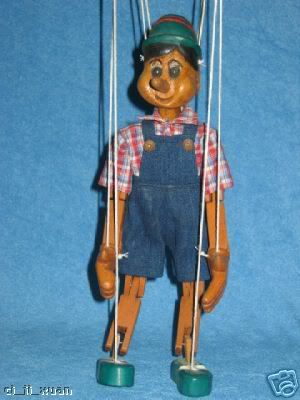
People are what stories are about. Readers read to live vicariously through the characters in the book. If they can't identify with those characters, the story falls flat.
Of course a story needs a well drawn, believable cast of characters. But a book with only well drawn characters and no plot is not a story. It's a character study. You need to decide whose story you are telling and what will happen to them at the outset, when you first formulate your premise. Your choice of character is paramount. He must be ripe for this story to happen to him, or your story won't engage.
So why have you chosen him? What is he lacking that he needs to learn from going through this experience? How will it change him? Get this right and your character will react and drive the plot as they sort out their personal issues. It's called a Character Arc and it's as old as storytelling itself. For a more detailed analysis check out these books:
The Writer's Journey by Christopher Vogler
The Key: How to Write Damn Good Fiction Using the Power of Myth by James N. Frey
Your character should be interesting rather than likeable - some of the most compelling literary characters are utterly deplorable human beings! - and they should be flawed in some way they are not aware of.
How to make characters real? To write a convincing characterisation you have to know them as you would a friend. There's more to that than a list of attributes and a CV. To flesh out your characters you could try an online journal or blog. Write in the voice of the character, play at being them. It's a good way to explore their attitudes and background, but don't fall into the trap of trying to put all that information into your book or you'll end up with the dreaded info dump!
Wednesday, 26 May 2010
Plotting (Again)

So I'm now plotting my new Romcom. Don't want to say too much about that at this stage except to say I'm working from two paradigms (yeah - how Hollywood is that?) so it's not as simple as usual. I'm taking my time about it because I really want to get a feel for this story before I write a word. Tone is very important in comedy, you can't just sling in few one liners and hope something will stick. The little kid inside me is impatient to get it written. Some of the scenes are already starting to play in my head so I'm feeling the stirrings of giddy excitement but it's best to keep a lid on it until everything's planned.
I saw this very good blog post today, singing the praises of a Mac programme called Scrivener which you may remember me going on about before. It also touches on the benefits of plotting before starting a project. Scrivener certainly helps with the process and it's the best programme I've found for storing your research and indexing and rearranging material.
The great thing about this stage - in some ways I love it better than writing - is nothing is set in stone. You can brainstorm to your heart's content. Of course that has to end eventually or you'd never write it, and that's a pitfall to watch out for. But at the plotting stage the Author is King of the Universe - anything can happen. Imagine the power! And it doesn't matter because I can change my mind in the cold light of day or once I've sobered up. I won't have written 1200 words of a scene that goes nowhere so nothing is wasted.
But I have to be clear about the shape of the story from start to finish. Clear and satisfied. There should be no niggly little doubts. These must be sorted before I start writing, because the problem could be deeper than just a nip and tuck - I may need to change something fundamental that alters the entire course of the story. Better to know that at the outset. So I'm prepared for this process to take a while. I mean months. What's the hurry? I'd rather get it right now than condemn myself to endless rewrites later.
Saturday, 20 February 2010
Outline or not?
Leading on from the last post about plotting software, I've been thinking about the whole issue of outlining.
I've seen this topic discussed on writers' boards many times over the years and what I find most interesting is how my own viewpoint has shifted over that time. All the How To books recommend an outline before you start a book. At the opposite extreme is the NaNoWriMo philosophy of No Plot, No Problem.
I first discovered Nano nearly four years ago and after years of planning but never getting down to writing it was a revelation to find that just sitting down every day and letting the words come out could work. It was exhilarating and fun and I was a convert. But the problems came later; revising a hastily written book is a huge task. And if you're writing a mystery the threads of the story need to be so carefully sown in you can't do it justice with such a helter-skelter approach.
With my now finished novel I faced a huge rewrite last year. It wasn't just a tweak, it was root and branch pruning. The plot was full of holes, some scenes didn't go anywhere and the characters were unbelievable. I had to go back to the drawing board and take the whole thing to pieces, discard the dead wood and write a lot of new material. It was hard work, and I couldn't help feeling that I could have written a much stronger story in the first place if I'd gone through the painful planning process before I'd written anything at all.
So I learned the hard way that planning matters.
Maybe it's the way my brain works. When I start a project it's all over the place, picturing scenes, contriving plot twists, conjuring characters. The plot refuses to be pinned down. Just when I think I know what a character is about, I have another brilliant idea to make him something else. I wrestle with that slimy octopus until it drives me near demented. I write myself into corners, waste time on scenes that go nowhere, get terminally frustrated.
The second act is the biggest problem. I can usually get a clear sense of Act 1, the set up for the story. That's easy. Then there's Act 3 - the big finish. Not as easy. Strange as it sounds, that's even harder to pin down. I keep wanting to change the ending; keep wanting to be surprised by my own story; keep writing like a reader, not a writer.
But Act 2 is toughest because it has no clear landmark in my head. I end up having the characters wander about for a while, maybe have a few twists and turns to keep things interesting, but generally I'm lost. And with a mystery you can't afford to be lost. You have to know exactly where you're going or it shows.
So that's why I'm a convert to outlining. I'm giving up on the thrills of discovery in favour of the thrills of mastery. If I already know what the scene is about I can concentrate on the writing, and hopefully that will make the whole process more efficient and satisfying. That's the plan, anyway. Watch This Space.
I've seen this topic discussed on writers' boards many times over the years and what I find most interesting is how my own viewpoint has shifted over that time. All the How To books recommend an outline before you start a book. At the opposite extreme is the NaNoWriMo philosophy of No Plot, No Problem.
I first discovered Nano nearly four years ago and after years of planning but never getting down to writing it was a revelation to find that just sitting down every day and letting the words come out could work. It was exhilarating and fun and I was a convert. But the problems came later; revising a hastily written book is a huge task. And if you're writing a mystery the threads of the story need to be so carefully sown in you can't do it justice with such a helter-skelter approach.
With my now finished novel I faced a huge rewrite last year. It wasn't just a tweak, it was root and branch pruning. The plot was full of holes, some scenes didn't go anywhere and the characters were unbelievable. I had to go back to the drawing board and take the whole thing to pieces, discard the dead wood and write a lot of new material. It was hard work, and I couldn't help feeling that I could have written a much stronger story in the first place if I'd gone through the painful planning process before I'd written anything at all.
So I learned the hard way that planning matters.
Maybe it's the way my brain works. When I start a project it's all over the place, picturing scenes, contriving plot twists, conjuring characters. The plot refuses to be pinned down. Just when I think I know what a character is about, I have another brilliant idea to make him something else. I wrestle with that slimy octopus until it drives me near demented. I write myself into corners, waste time on scenes that go nowhere, get terminally frustrated.
The second act is the biggest problem. I can usually get a clear sense of Act 1, the set up for the story. That's easy. Then there's Act 3 - the big finish. Not as easy. Strange as it sounds, that's even harder to pin down. I keep wanting to change the ending; keep wanting to be surprised by my own story; keep writing like a reader, not a writer.
But Act 2 is toughest because it has no clear landmark in my head. I end up having the characters wander about for a while, maybe have a few twists and turns to keep things interesting, but generally I'm lost. And with a mystery you can't afford to be lost. You have to know exactly where you're going or it shows.
So that's why I'm a convert to outlining. I'm giving up on the thrills of discovery in favour of the thrills of mastery. If I already know what the scene is about I can concentrate on the writing, and hopefully that will make the whole process more efficient and satisfying. That's the plan, anyway. Watch This Space.
Subscribe to:
Posts (Atom)