Saturday, 26 February 2011

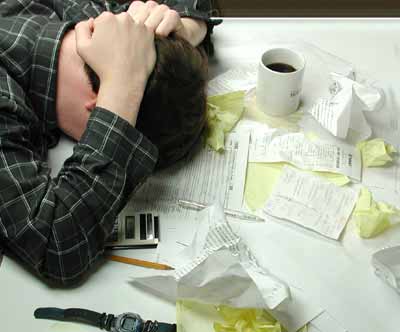
When to Call It Quits.


It's a funny life, making up stories and writing them down. Some stories can seem like the hottest thing since sliced ...er, chillies? Then you get half way through writing it down and find all your enthusiasm for the project has evaporated. So how do you know whether to force yourself to stick with it, or abandon the idea and start something else?

It's a tough one. Only you know how you really feel about a project. You could just be suffering from Act 2 Doldrums and need to push on through. Any activity gets boring if you've done it for long enough. It's important to analyse why you're stalled.

Do you still feel excited about the initial premise? If not, it's a pretty strong indication you may be flogging a dead horse. The first draft is only the start of a long process of editing and submissions, and if your heart isn't in it maybe you would be better off finding something you do feel compelled to write.

But the problem with shelving it is you could be reinforcing your lack of confidence in your ability to finish a project. If this is your first attempt at a novel it probably doesn't matter, but if you have a string of unfinished manuscripts cluttering up your hard drive this could be yet another confirmation of your failure. In that case you might be better off gritting your teeth and forcing yourself to get through it just for the satisfaction of writing The End.

If you do still like the premise, then maybe you are coming at the story from the wrong angle. You could try changing the MC, the POV or setting. Maybe you've taken a wrong turning somewhere in the plot and your subconscious is rebelling? You might need to take some time to think it through before continuing.

Remember though: most successful authors had a few attempts before they finally managed to write a fully finished novel, so don't beat yourself up if you decide to abandon a project. Writing should be fun, not torture.

Tuesday, 22 February 2011

Would Dickens have Tweeted?

Do you tweet? It's conventional wisdom that authors must be tireless self-promoters and get on all the social networks to establish a "platform" from which they can presumably relentlessly plug their wares to the world at large. But is it a good thing to put ourselves Out There for all and sundry to scrutinise?

I know some writers who are terminally shy and hate all that self-promotion razzmatazz. I'm a bit like that myself. Like most Scots I suffer from the Tall Poppy Syndrome - we're trained from an early age to keep the head down lest it be chopped off. So boasting and shouting about how great we are doesn't come naturally.

The trouble is of course, it comes all too naturally to some, sometimes to an obnoxious degree. Be honest, how many writers have turned you off their work by their tiresome self-importance? With Twitter and Facebook there's no mystique to the author any more. Their every bowel movement of an opinion is there for all to see, and if you don't happen to agree with their rabid political outpourings you might just feel a little alienated.

So isn't the whole exercise self-defeating? Time was when we knew nothing about the authors we read, unless some doughty reporter managed to get a scoop of an interview in one of the Sunday supplements. We could fondly imagine them as anything which suited us. Non-threatening, friendly, arty: mysterious. We didn't know where they had their legs waxed and we didn't want to know. Maybe some more of that mystery would suit us better today?

Saturday, 19 February 2011

Margaret Atwood on Changes in Publishing


Here is a very interesting talk by Margaret Atwood on how authors are being affected by the technological changes in publishing. She's a very witty and insightful speaker, so it's worth a look.

Wednesday, 16 February 2011

And The Award For Bravery Goes To...


I'm passing this on because when I read it it made me smile and we can all do with reasons to smile, can't we?

Many blogs (not the ones I read, I hasten to add) seem to concentrate on the negative aspects of this writing life. Every post is like a side swipe at unpublished authors. You're never good enough, you're doing it all wrong, you can't get published that way...etc, etc, yada yada yada. And yes, it is tough - I'd never pretend otherwise - but is it really necessary to be so negative about people's efforts? Rejection is tough enough without some smarty pants blogger telling us how rubbish we are. So that's why this blog post made such a nice change.

And to all authors, published or unpublished, new or accomplished, rich or poor, I salute you. It is not an easy road we walk, and it takes brass cojones to even attempt it. You're all stars in my book.

Saturday, 12 February 2011

Editing and Perfection


I've watched The September Issue twice in the last twenty-four hours and intend to watch it again later today before my 48 hour itunes store rental expires. And I've ordered the DVD for posterity. It's a fascinating look behind the scenes at the creation of the US Vogue September edition, and focuses mainly on the editor in chief, Anna Wintour.

Most of you will have seen the movie The Devil Wears Prada, based on the novel of the same name by Lauren Weisberger in which Meryl Streep plays the Bitch Boss from Hell, Miranda Priestly. Weisberger based her book partly on her experience as Wintour's assistant, and there are parallels between the real and fictional characters. But I found the real Editor in Chief far more interesting, which is why I downloaded The September Issue.

For anyone with even a passing interest in fashion this documentary will be required viewing, not least because of Wintour's stony-faced persona and relationships with her editorial staff. Here is a woman so focussed on her job she has no time for inconsequential small talk to the point where she can be abrupt and even rude. She knows her own mind and doesn't worry about hurting anyone's feelings in the process. She doesn't balk at binning thousands of dollars worth of photography if she doesn't think it's quite right. And her staff might rail and rage, weep and worry, but they know she is right and give her unstinting respect.

It's a fascinating study, not just in fashion or the glamour industry, but in the ruthless necessity of editing to achieve perfection. It's worth a look.

Wednesday, 9 February 2011

Tea Bag Anyone?


It's so long since I did serious revision I'd forgotten how rewarding it can be. Once you get past the stage of thinking "My God this is awful, how could I have written such shit???" and look on it as a renovation job there is pleasure to be had. It's a bit like moving into an old house that needs a lot of work. You know the dimensions of the rooms and the style you want, it's just a case of repairing the plaster work and slapping on some wallpaper.

I've stopped cringing now and expect to have to rewrite most of it, so it's a nice little bonus when I find a sentence or paragraph that doesn't need much. It means I can skip on feeling momentarily smug.

But what really comes through from the first draft, in amongst the clunky prose and the cliche ridden dialogue, is a sense of the mood of the scenes. Establishing that is what makes a first draft so hard to write when you're thrashing around trying to move the plot forward while getting to know your characters. But once it's on the page you can fix the bad writing. In fact I like fixing it. I'd forgotten how much I like it.

Then there are the unintentional and hilarious gaffs. Like this one:

He poked the tea bag with a fork before fishing it out of the mug and handing it to her.

Wonder what she was going to do with that tea bag?