Thursday, 16 September 2010

Which is more important: Character or plot?


People are what stories are about. Readers read to live vicariously through the characters in the book. If they can't identify with those characters, the story falls flat.

Of course a story needs a well drawn, believable cast of characters. But a book with only well drawn characters and no plot is not a story. It's a character study. You need to decide whose story you are telling and what will happen to them at the outset, when you first formulate your premise. Your choice of character is paramount. He must be ripe for this story to happen to him, or your story won't engage.

So why have you chosen him? What is he lacking that he needs to learn from going through this experience? How will it change him? Get this right and your character will react and drive the plot as they sort out their personal issues. It's called a Character Arc and it's as old as storytelling itself. For a more detailed analysis check out these books:
The Writer's Journey by Christopher Vogler
The Key: How to Write Damn Good Fiction Using the Power of Myth by James N. Frey

Your character should be interesting rather than likeable - some of the most compelling literary characters are utterly deplorable human beings! - and they should be flawed in some way they are not aware of.

How to make characters real? To write a convincing characterisation you have to know them as you would a friend. There's more to that than a list of attributes and a CV. To flesh out your characters you could try an online journal or blog. Write in the voice of the character, play at being them. It's a good way to explore their attitudes and background, but don't fall into the trap of trying to put all that information into your book or you'll end up with the dreaded info dump!

Monday, 13 September 2010

Inspiration


I've been inspired, over the weekend, to resurrect a project I've been fiddling about with for years - honestly, I first got bitten by the bug nearly 20 years ago. It's a story from the 16th century, well documented but still a mystery, which I've researched on and off during that time, always searching for new angles and insights. But none of my half assed attempts to retell the story have amounted to much. In the end I give up, telling myself it's a hopeless task. But obviously some part of me still hankers after it. Hence my weekend inspiration.

It was prompted by watching The Lion in Winter, the 1968 movie starring Katherine Hepburn and Peter O'Toole. If you haven't seen it recently it's worth a trip to Youtube. Hepburn alone brings this potentially dry story to crackling intensity, but she's helped by a marvellous cast including youthful Anthony Hopkins and Timothy Dalton. The film was based on a stage play and the action takes place one Christmas when Henry II gathers his feuding and plotting family to discuss the future of the monarchy. Limited sets, no special effects, just great dialogue and wonderful acting. It has inspired me to use the device of a single weekend and a gathering under one roof to tell my own story.

Wednesday, 8 September 2010

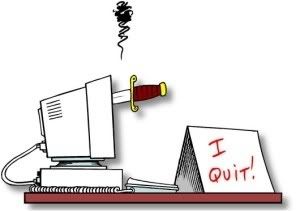
When to give up?


I've seen a few of these posts lately on the many boards where I lurk.

"I've spent forever on my book, sent it to every agent and publisher in the English speaking world, got nowhere with it. Should I attempt yet another rewrite or give up on it and start something else?"

Some are even more profound. After years of trying the poster is wondering whether to throw in the towel altogether.

Tough questions. And they're not the sort there's a simple answer for.

Time was when publishers and agents were the acid test of what was publishable - if they didn't want you it was a fair assumption you weren't good enough so maybe you should call it quits. But the times, they is a-changin'. How do you measure your worth when the publishing industry is in a recession and even previously published authors are finding themselves on the scrap heap? You could drive yourself mad endlessly rewriting a book that's perfectly acceptable in the mistaken belief it will bring a book deal closer. All the time the book deal isn't there, however good you are.

I've read a couple of interesting blog posts this week which touch on the changes happening around us. The Book Deal touches on the issue of self publishing as a real prospect for getting noticed by mainstream publishers. He speculates this may be the source for publishers' mid list in the future. It's a controversial suggestion - a couple of years back no industry insider would have entertained the idea. But it's indicative of the way the landscape is shifting.

And here is an interesting interview with Writers' Digest publisher Jane Friedmann about how she sees the role of agents changing in the future. Food for thought.

Friday, 3 September 2010

Research


I read somewhere - probably in one of the million or so books on writing I seem to have purchased over the years - that in order to write realistic fiction you have to do even more research than you would for non-fiction. Not only do you have to know the facts about the world you are creating, you have to internalize them to such an extent that you can create real people to live in that world.

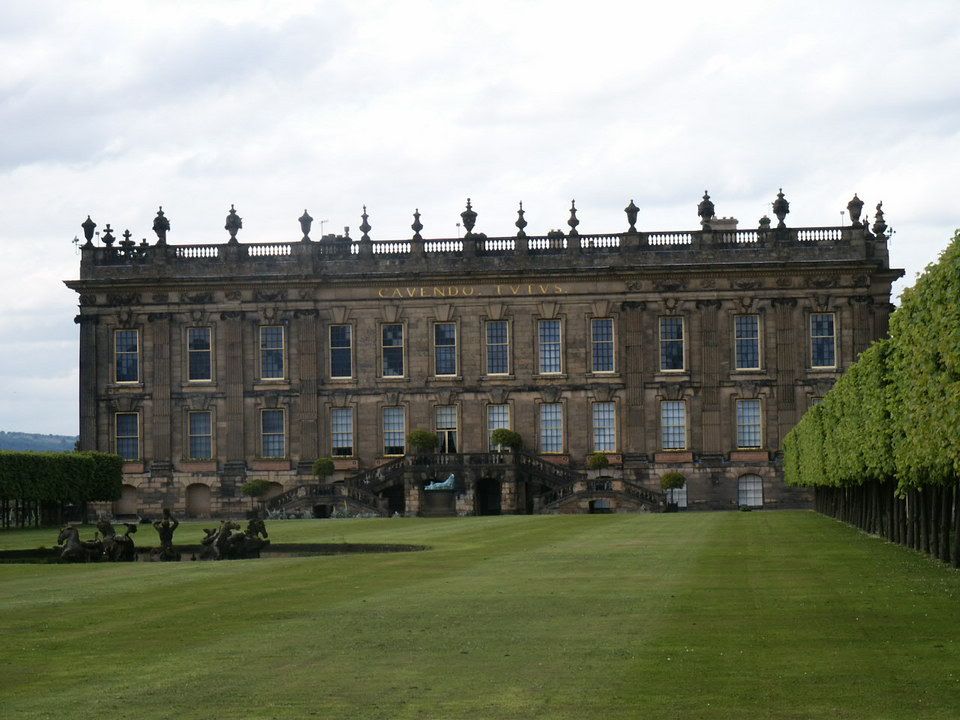
I don't know how true that is, never having attempted non-fiction, but I would say research is something of a quagmire for me. It's so easy to get absorbed in the details and carried away with immersing yourself in an area of research you can find yourself drifting away from the original point of the exercise. At the moment I'm looking into faded stately homes for my current WIP - it's not a major plank of the book but it helps me visualise the setting for the main part of the story. The upshot is I can spend far too much time trawling through books on the subject. It's not a hardship by any means - I've always loved visiting stately piles and looking at classical architecture - but maybe that's the trouble.

But for all the pictures I can't seem to lay hands on architectural plans for these houses. Any suggestions?

Tuesday, 31 August 2010

Starting with a bang...


Interesting query came up on one of the boards I frequent:

We're constantly told to begin with action, but how does that fit with the 3 Act Structure?

Every story has a logical sequence of beginning, middle and end. That's all the 3 Act Structure is - so simple it's a wonder someone had to find a name for it, not to mention all the myriad books on the subject.

So you have to be aware of these three stages. Mostly you will be before you even give it a thought. If you've ever successfully told a joke you'll be aware of it.

First Act: Man goes to the doctor.
Second Act: Man says, "I think I'm a pair of curtains"
Third Act: Doctor says, "Pull yourself together, man!"

If you're unsure, watch a few Star Trek episodes. Roughly ten minutes at the beginning sets up the story (First Act), the struggle and complications which take up the next half hour (Second Act) ending with the climax and return to normal, including that annoying jokey bit of banter between the leads (third Act).

So we've got that. But we still need to start with something interesting enough to pull in the reader/viewer. So what do we do?

Well, in literature and movies there is a well trodden tradition of starting in media res - or in the middle of the action. You can start at the end of Act 1 when the main character is in a tight spot and has to make a desperate choice - or at the end of Act 2 where he's in a tighter spot and has to make an even more desperate choice. Then you can flashback to the events leading up to this dramatic opening. If you've done your job of making the start intriguing enough the reader will stay with it to find out the background. The story order is fixed but you can tell it any order you want. That's the magic of storytelling!

Thursday, 26 August 2010

Truby's 22 Steps


In my constant quest to figure out what the hell I'm doing at this writing lark I've been reading yet another screenwriting tome. John Truby's Anatomy of Story: 22 Steps to Becoming a Master Storyteller is a very interesting book. He takes apart the traditional three act structure and in its place gives you 7 essential steps around which to build your story. Further to that, he details the eponymous 22 steps, not all of which have to be included, but the fact that he mentions them gives you food for thought.

I'm reading this book with mixed feelings. There are lots of Eureka moments where I can see what is wrong with my WIP, but also those sinking feelings when you realise you need to go back to the start and rework the characters and the premise at the most basic level. It's great and I'm loving it. Because if it means a lot of hard work it's probably improving the story as well as teaching me things I didn't already know.

He has an excellent website which promotes his software and add-ons to the book, but if you sign up to his mailing list you get a free Secrets of Genre booklet. You all know how I love my freebies!

I downloaded the Blockbuster demo yesterday for a free 15 day trial, but it looks complicated and the book covers all you really need to know so I don't know whether it's worth the expense.

Monday, 23 August 2010

Rules? Nobody told me there were Rules!


Everywhere you go on Writers' Forums you run into lots of excellent and not-so-excellent advice. Little nuggets and homilies, usually littering people's signatures, like "If you see an adjective, kill it!" and "The Road to Hell is paved with Adverbs".

I've been knocking around these places long enough to see a few sacred cows built up only to come crashing down when someone comes up with an exception to the Rule. The net result is I no longer believe in rules. Of course you need grammar and spelling, those kind of rules. But once you get to the creation of fiction anything goes, and there is only one rule as far as I can see: IF IT WORKS, DO IT.

So why do these so-called rules get bandied about? I think it comes from well meant feedback people get from their submissions - an Editor or Agent mentions the fact that Wannabe has too much description in his first chapter. Wannabe then relays this to his group as "I was told not to have weather in the first chapter" and before you know it it's been enshrined in marble.

The point about being creative is you have to be flexible and open to any new ideas. Same with your method of working. There are no hard and fast rules about how a manuscript comes into being; some people painstakingly outline, research for months and plan every detail meticulously before they write a word. Then they sit down every day and churn out thousands of words at a time without pause. At the other end of the spectrum some take the Nanowrimo approach, barely plan anything and bash out a rough draft full of holes and margin notes to ADD LATER. Some write a passable first draft that hardly needs a spell check, others go through a hundred drafts before it resembles something readable. Does it really matter? Is one way right or wrong? It seems to me writing a novel is such a personal endeavour it must take a personal approach. So do what suits you best, and don't listen to any so-called Rules.